
In most cases, you do not need a special permit simply because you’re driving an exotic car across state lines. If your car is properly registered, insured, and legal to drive in your home state, you can generally travel across the country without getting a new permit every time you cross a state border. The important part is making sure your driver’s license, vehicle registration, insurance, and vehicle equipment meet the requirements that apply along your route.
For someone heading out on an exotic car rally, there’s a little more to think about than just filling the tank and hitting the highway. Your car may be registered in one state, your rally may pass through several others, and the rules for things such as insurance, equipment, and temporary registration can differ.

The good news is that crossing a state line doesn’t automatically turn your car into an out-of-state registration problem.
For a normal road trip, no special “exotic car permit” is required simply because of the vehicle’s value, make, or performance.
A Lamborghini traveling from Florida to Georgia doesn’t need a different type of driver’s license simply because it’s a Lamborghini. The same basic idea applies to a Ferrari driving from California to Nevada or a Porsche traveling from Texas to Colorado.
What matters is whether you and the vehicle are legally allowed to be on the road.
That means keeping your driver’s license current, maintaining valid registration, carrying the required insurance, and following the laws of the states you’re visiting.
The U.S. government maintains a state-by-state directory for motor vehicle agencies, which is useful when you need to check a particular state’s requirements.
The situation changes if you’re moving to another state or becoming a resident there. That’s when registration and licensing requirements can become much more complicated.
A road trip, however, is different from moving.
Generally, a valid state driver’s license allows you to drive throughout the United States.
You don’t normally need to apply for a new driver’s license every time your road trip crosses a state border.
That’s one reason interstate road trips are so straightforward for U.S. drivers.
The distinction is between visiting another state and becoming a resident of another state.
If you’re simply driving through Arizona on your way to California, you’re not generally expected to register your car in Arizona just because you spent a day there.
But if you move to Arizona and establish residency, that’s a different situation.
For Crown Rally participants, this distinction is important because a rally can cover a lot of ground in a short period of time. Crown’s 2026 West Rally, for example, is scheduled as a multi-state journey from Seattle to San Diego.
You don’t need to re-register the car every time the rally crosses a state line.

For a temporary trip, your home-state registration generally travels with the vehicle.
You should carry proof of current registration, just as you would on a normal road trip.
The bigger issue is whether you’re actually moving the vehicle to another state as a resident.
That’s where states can impose their own registration requirements.
California DMV, for example, has specific procedures for residents moving out of California and changing their vehicle registration situation.
That’s very different from spending a few days driving through California as part of a rally.
So if you’re taking your exotic car on a cross-country trip, don’t confuse temporary travel with establishing residency.
This is one area where you should check your policy before leaving.
Don’t assume that because your car is insured at home, every detail of your coverage will automatically be the same everywhere you drive.
Your insurance policy should provide the coverage required for your vehicle and your trip, but an exotic car can have some additional considerations.
For example, you may have:
Those details can matter on a rally.
If your policy has special conditions because the car is high-value or used primarily for recreational driving, read the policy before the trip rather than assuming you’re covered.
This deserves a little more attention.
If the car is financed, the lender may technically have an interest in the vehicle. If it’s leased, the leasing company owns it.
That doesn’t necessarily mean you can’t take the car across the country. But you should know what your agreement allows.
For a long-distance rally, it’s worth confirming:
The same applies if you’re driving a car owned by a business or another person. If the name on the title isn’t yours, make sure you have permission to take the car on the trip.

This is where the answer can change considerably. A rental company may have its own rules about taking a vehicle across state lines. Some may allow it without much trouble. Others may have restrictions based on the vehicle, destination, rental agreement, or mileage. And an exotic rental can be treated differently from a normal economy car because of the vehicle’s value.
Before you book, tell the rental company exactly what you’re planning:
“I’m taking this vehicle from one state to several others as part of a multi-day road trip.”
Get the answer before you sign the agreement.
That is much better than discovering halfway through the rally that your rental agreement has a mileage or geographic restriction.
Yes. This is probably the biggest thing to remember when driving an exotic car across the country.
You don’t need a new permit simply because you crossed a border between states, but the laws governing vehicles aren’t identical everywhere.
States can have different requirements involving:
Most of these won’t create a problem for a properly maintained factory-spec exotic car. Modified vehicles can be another story.
If your car has an aftermarket exhaust, heavily tinted windows, unusual lighting, or other modifications, it’s worth checking the laws along your route.
Seeing a California plate in Arizona isn’t unusual. Neither is a Texas plate in Florida. People travel. The fact that your exotic car is registered in another state doesn’t automatically make it illegal to drive there.
Problems tend to arise when someone is actually living in a state but continuing to operate a vehicle as though they’re only visiting to avoid that state’s registration requirements.
That’s a very different situation from a Crown Rally participant spending a few days crossing the country.
If you’re simply traveling, keep your registration current and carry the appropriate documents.
For a long-distance rally, I would keep the important paperwork together rather than throwing everything into the glove box.
At minimum, have access to:
Digital backups are useful, too. But don’t make your phone the only place your important documents exist. A dead phone or poor cell service isn’t the moment you want to start searching through email for your insurance card.
Temporary permits are usually a state-specific issue, not something every driver needs when taking a road trip.
They can become relevant when a vehicle doesn’t have normal registration or when someone is bringing a newly purchased vehicle into another state.
For example, the California DMV offers temporary operating permits for certain situations. That doesn’t mean a properly registered exotic car needs a temporary permit every time it crosses into California.
The circumstances matter. If you’ve just purchased the car, have temporary tags, are transferring registration, or are dealing with an unusual registration situation, check the rules for the state involved before leaving.

This is one situation where you should pay closer attention to paperwork. Imagine you buy a Ferrari in another state and need to drive it home. Now you’re not simply taking your normally registered vehicle on vacation.
You may have to deal with:
The exact process depends on where you bought the vehicle and where you’re registering it. This is a good example of why the question “Do I need a permit?” doesn’t have one universal answer. The circumstances surrounding the trip matter.
This is where preparation becomes particularly useful. Crown Rally events can cover significant distances across multiple states. The current Crown West 2026 itinerary, for example, starts in Seattle and finishes in San Diego, with stops through Washington, Oregon, California, and other destinations along the route.
That’s a lot of miles. But the legal side of the trip is still relatively straightforward for a properly registered U.S. vehicle. You need to be ready to drive legally in every state you enter.
Crown Rally’s current event information specifically states that participants must comply with all local, state, and federal laws and that the event is not a race.
That last part is worth emphasizing. The fact that you’re driving an exotic car with other exotic cars doesn’t change the speed limit.
Crown Rally is invite-only, and participants register through the organization’s event process. The event itself may have requirements beyond what your state’s DMV requires. Those can include participant eligibility, event registration, vehicle requirements, safety rules, and event-specific instructions.
So think of preparation in two layers:
You need both.
This is where I would spend a little extra time before a multi-state rally. A factory Ferrari is one thing. A Ferrari with a modified exhaust, lowered suspension, aftermarket lighting, dark window tint, or other changes may have to meet different requirements depending on where you’re driving.
The same applies to other high-performance cars. You don’t necessarily need to return the car to factory specifications before every road trip, but you should understand whether your modifications are legal in the states on your route.
If you’re unsure, check the relevant state motor vehicle agency rather than relying on what is legal in your home state.
USAGov maintains a directory of state motor vehicle agencies for this reason.
An exotic car is built to perform. Public roads aren’t. This sounds obvious, but it’s especially relevant during a rally where several high-performance cars may be traveling together.
Crown Rally is very clear about this. Its current event information says participants must follow local, state, and federal laws, and that racing can result in immediate removal from the event.
So crossing into a state with a different speed limit doesn’t permit you to treat the highway like a track.
If you want to experience what the car can really do, use an appropriate closed-course experience rather than a public road.
In some ways, absolutely. The legal basics are mostly the same. The experience isn’t. You’re dealing with a higher-value vehicle, longer distances, potentially unfamiliar roads, and sometimes a group of other performance cars. That means preparation becomes more important.
Think about:
The goal isn’t to overcomplicate the trip. It’s to avoid having a preventable problem interrupt it.
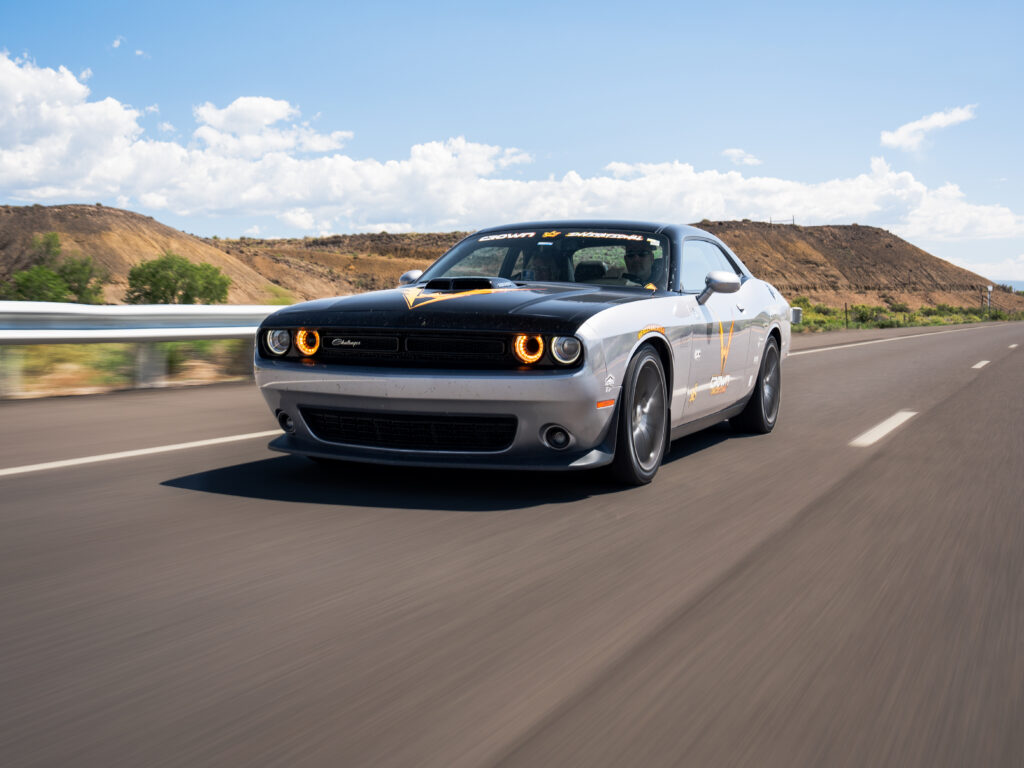
A few days before departure, go through the basics.
And then leave yourself enough time. The worst way to start a rally is already feeling rushed.
You generally do not need a special permit just because you’re driving an exotic car across multiple U.S. states. A valid driver’s license, current vehicle registration, and appropriate insurance are the basic starting points. The bigger issue is understanding the state-specific rules that may apply to your vehicle, particularly if it is modified, newly purchased, rented, leased, or otherwise registered under unusual circumstances.
For Crown Rally participants, there’s another layer: the event’s own rules. Crown’s current rally information makes clear that participants must obey local, state, and federal laws, and that the rally is not a race.
So before you point your exotic car toward the next state line, make sure the boring stuff is handled.
Once those are taken care of, you can get back to the part that brought you to the rally in the first place: the drive.
A: Usually, no. There is no general U.S. permit required simply because a vehicle is exotic or high-performance. You should have a valid driver’s license, current registration, and appropriate insurance.
A: Generally, yes, when you’re temporarily traveling. The situation is different if you move and become a resident of another state, which can trigger that state’s registration requirements.
A: Your policy may provide coverage outside your home state, but you should confirm the details with your insurer—especially if you’re driving a high-value vehicle on a multi-state rally.
A: No. A temporary road trip doesn’t normally require you to register the vehicle in every state you pass through. Registration becomes a different issue when you establish residency or otherwise meet a state’s registration requirements.
A: Possibly, but check the lease agreement first. Look for mileage, geographic, insurance, and usage restrictions.
A: Rental availability and rules depend on the rental company and the specific event. If you rent, confirm that the company allows the entire route and mileage before booking.
A: Yes. Crown Rally has event-specific participation and safety requirements. Its current rally information requires participants to comply with local, state, and federal laws and states that the event is not a race.
A: Carry your driver’s license, vehicle registration, proof of insurance, and any documents related to ownership, leasing, or rental. Keep backup copies of important documents as well.
Request Invitation