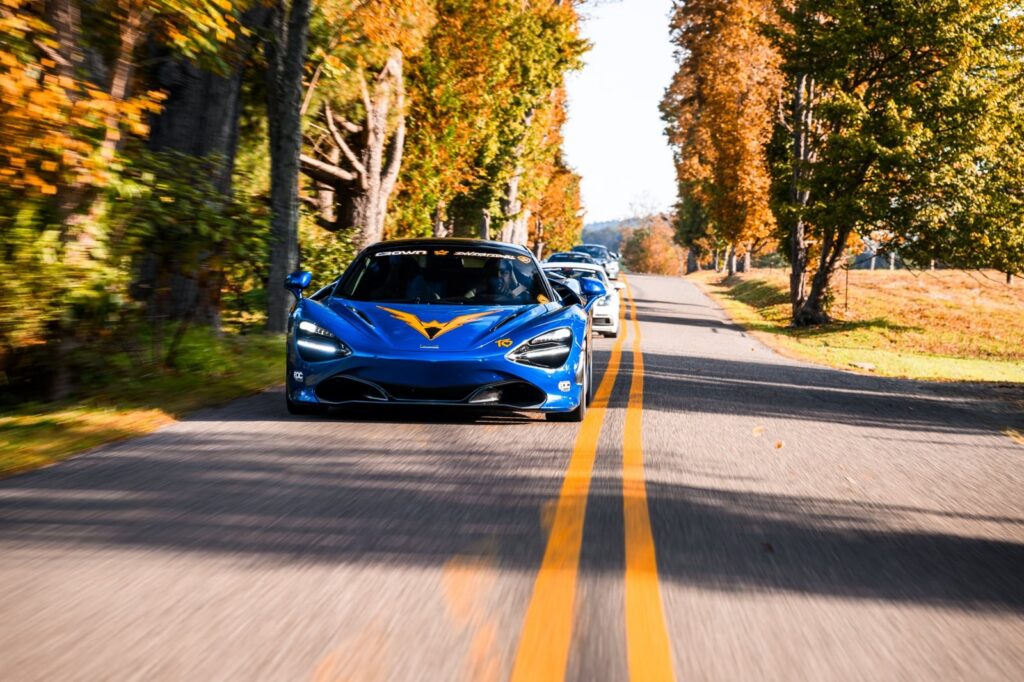
Some exotic cars make an impression before the engine even starts. The Ford GT is one of them.
Its low carbon-fiber body, dramatic flying buttresses, race-inspired cockpit, and unmistakable proportions were shaped by performance rather than convention. But a great exotic car rally requires more than a car that photographs well at the starting line. The vehicle also has to make the miles, changing roads, checkpoints, and shared driving experience memorable.
That is where the Ford GT makes sense.
At Crown Rally, we bring automotive enthusiasts together through driving, networking, lifestyle experiences, and philanthropy. A car as focused as the Ford GT fits naturally into that environment because its appeal extends beyond raw specifications. It connects motorsport history, advanced engineering, rarity, and driver involvement in one machine.
The modern Ford GT was engineered around many of the same priorities that matter in motorsport: low weight, aerodynamic efficiency, precise handling, strong braking, and effective management of airflow.
Ford describes the GT as having a carbon-fiber body paired with aluminum structures and a 3.5-liter twin-turbocharged EcoBoost V6 producing 660 horsepower in its later road-car specification. Ford also says its teardrop body shape was developed through extensive wind-tunnel work.
That engineering matters during an exotic car rally because the experience involves more than accelerating in a straight line.
A good rally route can expose a driver to long sweeping roads, tighter sections, elevation changes, city arrivals, highway stretches, and destination stops. A car built around balance and driver feedback can remain interesting even when outright speed is neither necessary nor appropriate.
The GT does exactly that.
The Ford GT carries one of the most recognizable stories in American motorsport.
The original Ford GT40 famously finished first, second, and third at the 1966 24 Hours of Le Mans before Ford continued its winning run at the event. Decades later, the modern Ford GT returned Ford to Le Mans competition, with the race version winning its class in 2016.
That history changes the way the car feels in an enthusiast setting.
When a Ford GT pulls into a rally checkpoint alongside Ferraris, Lamborghinis, McLarens, Porsches, and other performance cars, it brings its own identity. It is not simply another expensive exotic. The shape, name, and engineering are tied directly to endurance racing history.
For enthusiasts, those stories are part of what makes a rally lineup worth experiencing.
The Ford GT uses a twin-turbocharged, intercooled 3.5-liter EcoBoost V6 producing 660 horsepower in its later production specification.
Earlier published Ford technical specifications listed a top speed of 216 mph and a 0–60 mph time of under three seconds.
Those numbers explain the GT’s performance potential, but they are not what makes the car suitable for public-road rally driving.
On a road rally, the more relevant qualities are throttle response, passing capability where lawful and safe, braking performance, chassis control, and the way the drivetrain keeps the driver engaged over changing roads.
Maximum speed belongs in controlled conditions. The experience of driving a Ford GT does not depend on approaching it.
One of the Ford GT’s defining features is that its aerodynamics are active rather than purely cosmetic.
The car’s rear wing and other aerodynamic systems change according to operating conditions. Ford designed the teardrop body to reduce drag while generating useful downforce, helping the car remain stable as speed increases.
That makes the GT especially interesting from an enthusiast’s perspective.
Many exotic cars look aerodynamic while sitting still. The Ford GT makes airflow part of how the vehicle actually operates.
Its flying-buttress bodywork channels air around the car, while the active systems can change configuration based on the selected driving mode. The result is a car where the exterior design and mechanical purpose are closely connected.
For a rally participant, that creates another layer of appreciation. You are not simply looking at a dramatic body. You are looking at engineering that was shaped around what the air is doing to the vehicle.
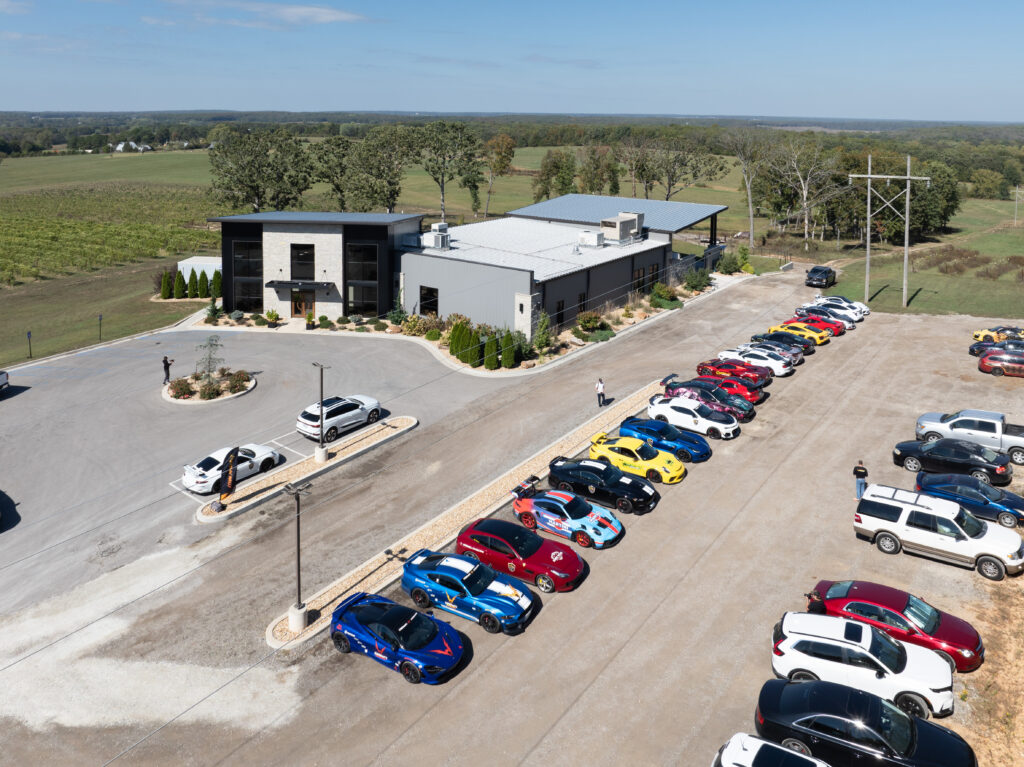
Extremely low exotic cars face a practical problem during road rallies: the world is full of driveways, ramps, changes in pavement, and speed bumps.
Ford gave the GT a hydraulic suspension system that can change ride height depending on the selected drive mode. Moving into Track mode lowers the vehicle by 50 millimeters while also changing spring rates, damper behavior, and aerodynamic settings. Track mode is specifically intended for closed-course use.
More useful during ordinary road driving is the front-lift function.
Ford says the system can raise the front of the GT at lower speeds to help it clear obstacles such as driveways and speed bumps.
That may sound like a minor detail compared with 660 horsepower, but on a multi-stop exotic car rally, practical details matter.
A car may need to enter a hotel, pull into an event venue, approach a checkpoint, or negotiate unfamiliar pavement. Ground clearance can quickly become more relevant than a top-speed number.
This is one of the places where the GT’s engineering helps bridge the gap between extreme performance and actual road use.
Power is only part of performance. Weight matters too.
The Ford GT relies heavily on carbon fiber, including its lightweight body construction. Ford paired those components with aluminum structures to reduce mass while maintaining the strength required for a high-performance vehicle.
Reducing weight affects more than acceleration.
It influences braking, direction changes, suspension response, and the overall sense of connection between the driver and the car. That is especially noticeable on a route where the roads vary throughout the day.
The result is a car that was engineered around the relationship between power, aerodynamics, weight, and chassis behavior rather than simply chasing a large horsepower figure.
Performance explains part of the Ford GT’s appeal. Rarity explains another.
An exotic car rally is also a social event. Cars are parked together at launch events, viewed at checkpoints, photographed throughout the route, and discussed long after everyone reaches the destination.
The Ford GT rarely disappears into the background.
Its extreme proportions make that almost impossible. The cabin sits low between pronounced fenders. Air channels pass through the rear bodywork. The doors cut deeply into the roof. The rear wing changes position. From almost any angle, the car looks unlike a conventional performance vehicle.
That visual identity contributes to the rally experience because the cars themselves become part of the event.
Owners discover other builds. Spectators encounter vehicles they may rarely see in person. Participants talk about specifications, modifications, racing history, and ownership experiences.
The drive creates the setting. The cars help create the community.
The strongest argument for bringing a Ford GT to an exotic car rally is not that it beats every other car in every category. It does not need to.
Its advantage is character.
A Lamborghini may deliver naturally dramatic theater. A Ferrari carries its own racing tradition. A McLaren approaches performance through another distinct engineering philosophy. A Porsche can combine remarkable speed with everyday usability.
The Ford GT offers something different: an American endurance-racing story wrapped around a carbon-fiber, mid-engine supercar created with an unusually strong focus on aerodynamics and track-derived engineering.
That makes the decision personal.
If comfort and luggage space are priorities, another exotic may be easier to live with over several days. If the goal is to bring a rare car with deep motorsport heritage, dramatic engineering, and unmistakable road presence, the GT becomes much harder to overlook.

The cars may bring everyone together, but the best rally memories rarely come from a specification sheet.
They come from the roads, the people, the stops along the way, the conversations in the parking lot, and the shared experience of arriving somewhere with a group of enthusiasts who care about the same things.
That philosophy is central to Crown Rally.
Since our inaugural Central Crown event in 2014, every rally we have hosted has supported a cause. Through the help of our attendees, sponsors, and staff, Rally4ACause has raised more than $1 million, donated 48 cars, and contributed hundreds of service hours to nonprofit organizations.
A Ford GT fits that environment especially well. It gives enthusiasts plenty to appreciate behind the wheel, but it also creates conversations wherever it stops.
And that is what an exotic car rally should do.
It should make the journey itself worth remembering.
Request Invitation