An exotic car rally asks more of a car than a quick acceleration run or a few laps on a closed circuit. Drivers may spend hours behind the wheel, cover significant distances, deal with changing road conditions, and still want a car that feels special every time the route opens up.
That combination is where the Audi R8 makes a strong case for itself.
At Crown Rally, we bring automotive enthusiasts together for driving experiences built around the cars, the people, and a larger purpose. The R8 fits naturally into that environment because it offers genuine supercar performance without demanding that every mile feel like an endurance test. Its mid-engine layout, naturally aspirated V10, available quattro all-wheel drive, and motorsport roots give it the excitement expected of an exotic, while its road-focused design makes longer drives easier to enjoy. Audi itself describes the R8 as its first “super sports car” and notes that the model was developed through cooperation with Lamborghini.
The centerpiece of the Audi R8 experience is its naturally aspirated 5.2-liter V10.
Unlike a turbocharged engine that relies on forced induction, the R8’s V10 develops its power without turbochargers. That gives the engine the immediate throttle response, rising power delivery, and distinctive high-rpm character that helped make the R8 memorable.
Output varies by year and version. For example, Audi rated the U.S.-market R8 V10 performance quattro at 602 horsepower, paired with a seven-speed S tronic dual-clutch transmission. Audi listed a 0-to-60 mph time of 3.2 seconds for the coupe.
Numbers only tell part of the story, though.
On an exotic car rally, the useful quality is how accessible that performance feels over a long route. You do not need to chase maximum speed to enjoy a responsive V10 pulling through the gears or hear the exhaust change character as the revs rise. The R8 can make an ordinary stretch of road feel like an occasion while still settling down when the route calls for relaxed cruising.
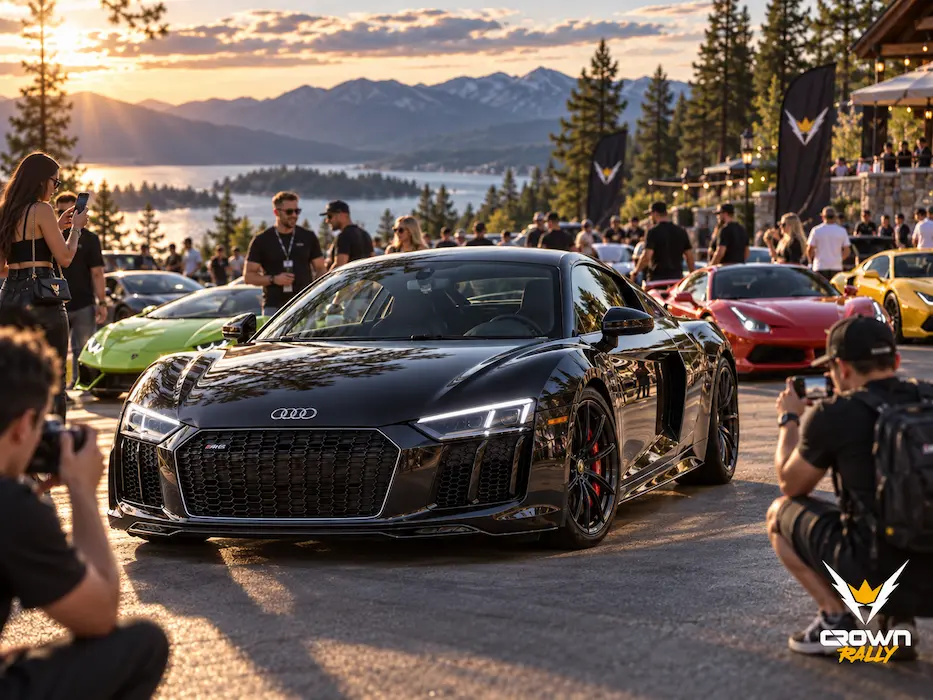
An exotic should create a sense of occasion before you even reach the destination.
The R8 does that particularly well. Audi’s naturally aspirated V10 has a distinctive firing order and exhaust character, with exhaust flaps opening under higher engine loads and speeds to increase the sound’s intensity.
That matters in an exotic rally for a simple reason: the experience is emotional as well as technical.
A rally brings together cars that people have often spent years admiring, searching for, modifying, or working toward owning. The R8 has the sound and presence to belong in that group without needing exaggerated styling or constant attention-seeking modifications.
A mid-engine layout places the engine behind the occupants but ahead of the rear axle. In the R8, that architecture helps concentrate mass closer to the center of the car, supporting the balanced handling expected from a dedicated sports car.
That balance becomes valuable on a route containing more than straight highways.
Long sweepers, elevation changes, tighter back roads, and repeated transitions between acceleration and braking can reveal whether an exotic feels composed or tiring. The R8’s layout gives the driver a car that feels purpose-built rather than a conventional performance coupe with more power added to it.
Audi also developed the road-going R8 closely alongside its racing program. According to Audi, the R8 road car and R8 LMS race car share a common basis, and approximately 50% of their parts were carry-over components in the versions Audi described. The production and racing cars also shared closely related V10 engines.
That does not make a road-going R8 a race car, nor should it be driven like one on public roads. It does mean the R8’s motorsport connection runs deeper than a badge.
For a multi-day road rally, the weather at the starting point may not be the weather you encounter several hundred miles later.
That makes traction worth considering.
Many Audi R8 variants use quattro all-wheel drive, while Audi also produced rear-wheel-drive versions. The quattro configuration can make particularly good sense for drivers who want additional traction when putting the V10’s power down in changing conditions. Audi’s R8 V10 performance quattro combined its V10 with all-wheel drive and a seven-speed S tronic transmission.
Rear-wheel drive has its own appeal. It delivers a different character and may suit a driver who prioritizes a more traditional rear-driven sports-car experience.
For rally use, the better choice depends on the driver, route, season, tires, and expected weather. More power or a particular drivetrain is not automatically better. Confidence over hundreds of miles matters more.
Some exotic cars are thrilling for 45 minutes and exhausting after several hours.
The Audi R8 was designed as a high-performance road car, so it can provide the drama of a mid-engine exotic without making every routine part of the trip unnecessarily difficult. That balance matters during a rally where drivers may spend much of the day moving between destinations rather than attacking a racetrack.
The car’s dual-clutch transmission can operate automatically or allow the driver to select gears. Audi also gave the R8 drive-select settings that change aspects of the car’s behavior for different driving situations. On applicable versions, comfort-oriented settings can make routine stretches of a rally considerably less demanding.
That versatility changes the ownership experience.
You can enjoy the engine when the road becomes interesting, then settle into the next highway section without fighting the car for the remainder of the day.
A short test drive can make an extremely stiff or demanding exotic feel exciting. Several consecutive days behind the wheel may produce a different opinion.
On a rally, consider factors such as seating comfort, cabin noise, visibility, climate control, ride quality, and how tiring the car is in traffic. These do not appear on a horsepower chart, but they can determine how much you enjoy the overall event.
That is one reason the R8’s dual personality has lasting appeal. It still feels unquestionably exotic, yet it was built to function as a road car rather than an occasional track machine with license plates.
The R8’s racing connection is especially relevant for enthusiasts.
Audi says the 5.2 FSI V10 entered GT3 racing in the R8 LMS in 2009. The company also states that the road and racing versions of the engine were closely related, while technologies such as the dry-sump lubrication system helped position the engine low in the chassis and maintain oil supply under demanding lateral acceleration.
For a rally participant, this background adds another dimension to the car.
You are not simply arriving in something that looks exotic. The engineering belongs to a platform with a meaningful competition history.
Performance gets the R8 onto the list. Presence completes the package.
The R8 has the proportions people associate with a proper mid-engine exotic: a low roofline, wide stance, short front section, dramatic rear proportions, and its recognizable sideblade treatment.
Yet its design has remained relatively restrained compared with some supercars.
That can be an advantage at an event where the lineup might include Lamborghinis, Ferraris, McLarens, Porsches, and other rare performance cars. The R8 is visually distinctive enough to hold its own without trying to imitate them.
Crown Rally events bring exactly this type of enthusiast community together. Our rallies combine the driving experience with networking, shared destinations, and philanthropy rather than making the car itself the entire point of the event.
Yes, but “practical” is relative when you are talking about a mid-engine supercar.
The R8 can work well for multi-day rally driving because its road manners make sustained mileage realistic. Still, drivers need to plan around the limitations that come with the format.
Packing space is not comparable to a grand tourer or performance SUV. Low ground clearance deserves attention around steep entrances, parking structures, construction zones, and uneven pavement. Fuel stops may also come more frequently when the V10 is driven enthusiastically.
That does not make the R8 a poor rally car. It simply means preparation matters.
For two people traveling several days, pack deliberately rather than discovering at departure that conventional hard-shell luggage will not fit the way you expected.
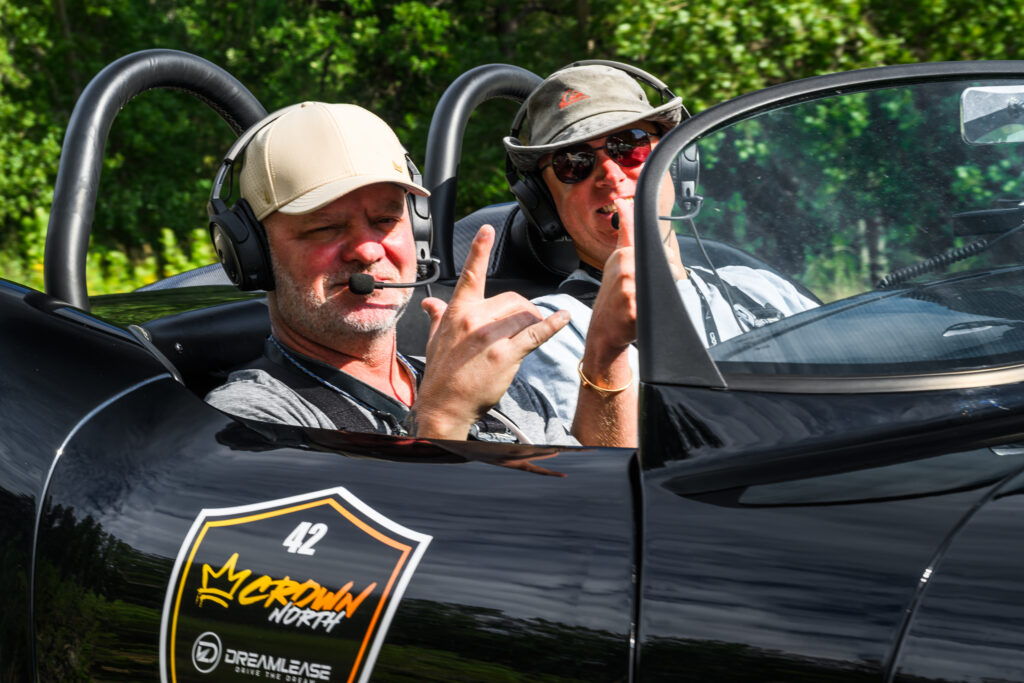
The best rally car is not simply the one with the strongest specifications. It is the one prepared to finish the route without preventable problems.
This is especially important for the R8 today because Audi ended series production in March 2024 after 45,949 examples had been produced since 2007. Every R8 entering a rally is now a used vehicle with its own age, mileage, service record, modifications, and wear history.
Before a significant multi-day drive, pay particular attention to:
A well-maintained R8 can be a compelling rally companion. A neglected one is still a neglected car, regardless of the badge on the hood.
For many drivers, an R8 with quattro is the more versatile rally choice because all-wheel drive can provide additional traction across variable conditions. An R8 RWD may appeal more to someone who values the feel and involvement of rear-wheel drive.
Neither is universally better.
If a route may encounter cool temperatures or changing weather, the extra traction of quattro could be valuable. On a predominantly dry route, an experienced driver may prefer the character of the RWD model. Tires, road conditions, and driver experience can matter as much as the drivetrain itself.
The important point is to choose the R8 that fits the journey rather than selecting purely from a specification sheet.
Yes. Ending production did not remove the qualities that make the R8 well suited to an exotic car rally.
In fact, its discontinued status may make the experience more distinctive as naturally aspirated V10 supercars become less common. The trade-off is that buying or preparing an R8 for rally use now requires greater attention to an individual vehicle’s condition and service history.
A low-mileage example is not automatically the best one. Age-related maintenance, tire condition, previous storage, modifications, service documentation, and how the car has actually been cared for all matter.
For an owner who already has an R8, good preventive preparation is usually more valuable than chasing additional performance before a long rally.
An exotic car rally is not won by having the largest horsepower number in the parking lot.
The experience comes from driving memorable roads, spending time around remarkable cars, meeting the people behind them, and reaching each destination with stories from the route.
That is where the Audi R8 makes sense.
It delivers the V10 sound and mid-engine performance expected of a true exotic. Its road-focused usability can make long stages easier to live with. Its Audi Sport heritage gives enthusiasts plenty to appreciate once the cars are parked. And its shape still looks right among a lineup of modern supercars.
For Crown Rally, the journey also goes beyond the machines. Since our inaugural Central Crown event in 2014, every rally has supported a cause. With the help of our attendees, sponsors, and staff, we have raised more than $1 million, donated 48 vehicles, and contributed hundreds of hours of service to nonprofit organizations through our #Rally4ACause efforts.
If you have an R8 ready for the road—or another exotic you have been waiting for an excuse to drive—request an invitation to an upcoming Crown Rally and experience what happens when automotive passion, community, and purpose share the same route.
A: Yes. The Audi R8 is a mid-engine super sports car built around a naturally aspirated V10 in its later generations, with high-performance RWD and quattro configurations. Audi itself positioned the R8 in the exclusive sports-car segment alongside brands such as Ferrari, Porsche, and Lamborghini.
A: The R8 is better suited to extended road driving than many highly track-focused exotics because it combines supercar architecture with features intended for normal road use. Comfort still depends on the specific model, seats, suspension configuration, road quality, and driver preference, so an owner should spend meaningful time in the car before committing to several long rally days.
A: Quattro can be the more versatile option when traction and changing conditions are priorities. Rear-wheel drive offers a different, more traditional sports-car character. Route conditions, tires, weather, and driver experience should guide the decision rather than drivetrain alone.
A: Output depends on model and year. Audi rated the U.S.-market R8 V10 performance quattro at 602 horsepower, while other R8 V10 variants used different outputs. Check the specifications for the exact model being considered rather than treating every R8 as mechanically identical.
A: Yes. Audi states that the R8 originated through cooperation with subsidiary Lamborghini. The two brands’ supercars have shared important engineering foundations, although an Audi R8 and Lamborghini Huracán should not be treated as identical vehicles.
A: No. Audi states that the final R8 left the Böllinger Höfe production facility in March 2024, ending a 17-year production run in which 45,949 R8s were built.